Daily Devotions
Friday, November 6, 2026
This devotion pairs with this weekend’s Lutheran Hour sermon, which can be found at lhm.org.
And He [Jesus] told this parable: “A man had a fig tree planted in his vineyard, and he came seeking fruit on it and found none. And he said to the vinedresser, ‘Look, for three years now I have come seeking fruit on this fig tree, and I find none. Cut it down. Why should it use up the ground?’ And he [the vinedresser] answered him, ‘Sir, let it alone this year also, until I dig around it and put on manure. Then if it should bear fruit next year, well and good; but if not, you can cut it down.’” (Luke 13:6-9)
In Jesus’ parable, the fruitless fig tree represents His people, and in a sense, all people. Jesus is responding to a question. The questioners had figured that some people were worse than others and that, perhaps, people like that should be cut down. Jesus’ response is blunt: “Do you think they were worse? No, I tell you; but unless you repent,” unless you turn back to God, “you will all likewise perish” (see Luke 13:1-5). And here we should thank God that—like that vinedresser—He’s got a soft spot for sick trees.
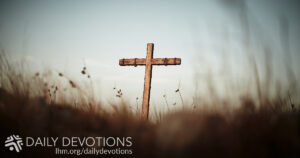
In the Bible, the plight and promise of trees and humans are intertwined. Humanity’s original purpose was to care for the trees of God’s garden. In the middle of that garden stood the Tree of Life, which would give endless life to the humans, as long as they ate from it. But to get to that life-giving tree, you had to pass by another one. This tree, God said, was the only tree that was off limits. All the other trees were theirs. Just this one was out of bounds. It was a simple command, a sacred moment for us to trust God and so to bear fruit—fruit proper to human “trees,” fruit born from a life rooted in God’s Word.
The devil, however, turned this sacred trust into a trap. And suddenly, the one thing that we could not have was all that we wanted. God’s gift started to look offensive. The sickness of distrust spread. The garden was desecrated. But, the devil had not figured on how much God loves people and trees. Before the scene ends, God promises that a “seed” from Eve would come, a Son born in our human family tree, who would destroy the work of the devil. He would restore that sacred trust and open the way back to life with God. The final battle would happen at another tree. This one also looked offensive, an instrument of a shameful death. Jesus was tempted to pass it by. But He prayed to God, His Father, “Not My will, but Thy will be done” (see Mark 14:36). It was the only way to save us, to heal God’s fruitless little fig tree. And Jesus—once crowned with thorns, hung to die on a cursed tree, yet risen from the dead—Jesus became the way back into God’s garden.
The cross then, is more than just another “survivor tree.” Now, the cross is similar, because survivor trees are trees that have witnessed the worst of humanity and, against all odds, have endured—whether it’s the elm tree that survived the 1995 Oklahoma City bombing, the pear tree that survived the 9/11 attacks, or the trees at ground zero that somehow survived after atomic bombs were detonated over Japan in 1945. Like the cross, these trees are witnesses that sin and death need not have the last word. But, when Jesus takes you by the hand and leads you back to God through His sacred tree, He doesn’t offer survival, but death and resurrection—not invincibility, but surrender, not bullet-proofing, but trust that bears fruit, not humanistic optimism, but eternal life with God.
WE PRAY: Dear Jesus, in Your cross of wood, let me find the Tree of Life, with every good. Amen.
This Daily Devotion was written by Rev. Dr. Michael Zeigler, Speaker of The Lutheran Hour.
Reflection Questions:
- Do you have a favorite tree? What about one that represents the resilience of life?
- Can the cross be both a “cursed” tree (see Galatians 3:13) and the Tree of Life (see 1 Peter 2:24)?
- As you live in that sacred trust today, what are the off-limits “trees” that God is calling you to obediently pass by?
Today's Readings:
Jeremiah 41-42Hebrews 11:1-19
Archive
All | 2026 | 2025 | 2024 | 2023 | 2022 | 2021 | 2020 | 2019 | 2018 | 2017 | 2016 | 2015 | 2014 | 2013 | 2012 | 2011 | 2010 | 2009 | 2008 | 2007 | 2006 | 2005 | 2004 | 2003 |Large Print